Typical PSI ranges for warehouse floors, when to specify higher strength, and what durability factors matter most.
Concrete PSI is compressive strength in pounds per square inch. For warehouse floors, it is typically specified at 28 days.
A common starting point for warehouse floors is about 5,000 PSI. Higher PSI is often specified for heavier loads, abrasion, and aggressive exposure.
Durability depends heavily on water-cement ratio, air entrainment (freeze-thaw), cementitious content, and curing.
A higher PSI mix can still fail if it dries out early or is placed on poor subgrade.
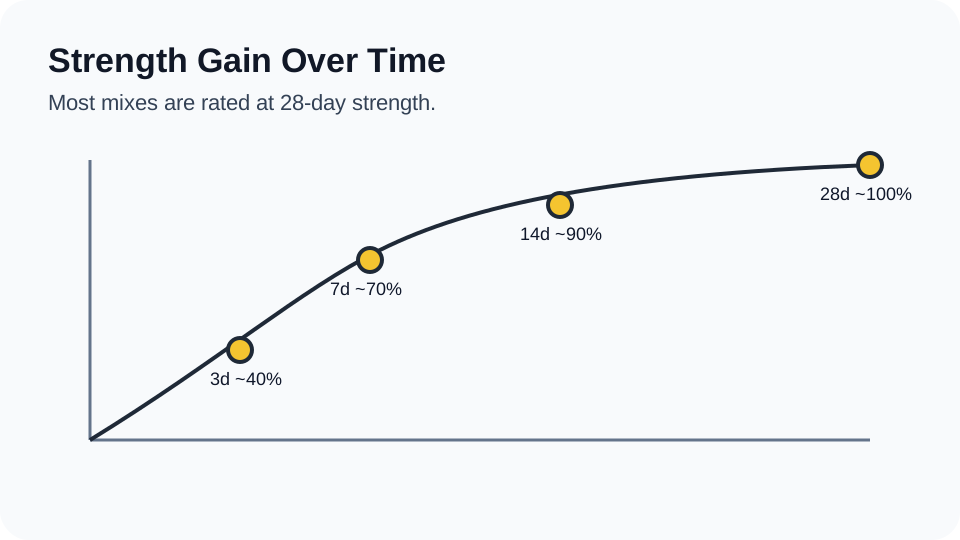
Strength develops rapidly early and then levels off. 7-day strength is often ~65–70% of the 28-day value for many mixes.
Protect from early traffic and rapid evaporation.
Practical items that support measurement, placement, and curing (affiliate link).
concrete PSI is explained here with practical ranges, why it matters, and what changes for higher-demand applications.
Standards depend on application, loads, and exposure. This page summarizes common practice and when to step up requirements.
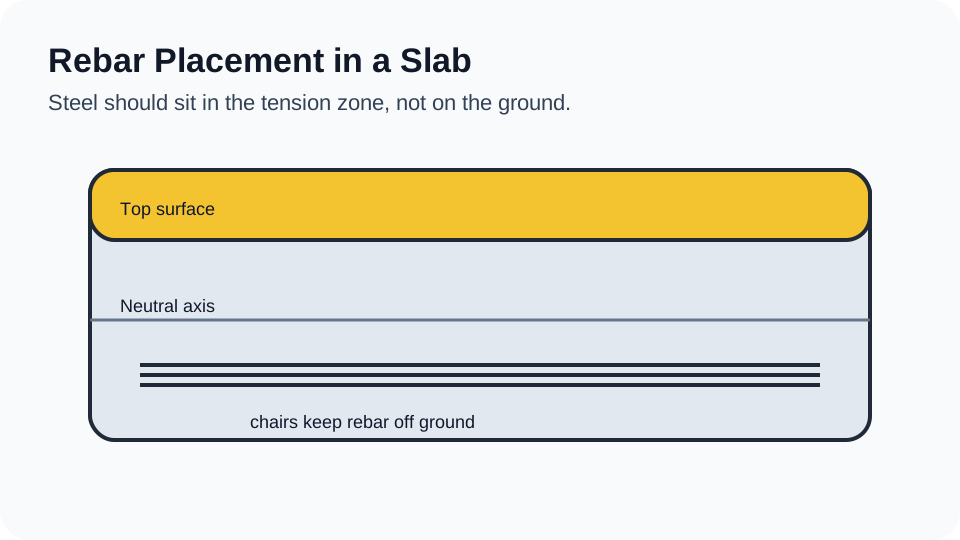
Top issues include poor curing, poor base prep, incorrect reinforcement placement, and premature loading.
No. Use this as a reference; follow engineered plans, product data, and local codes for structural work.